
A set dresser’s paradise
‘The film industry is enormously wasteful’, so groups like Props 360 have emerged to solve the problem…
‘The film industry is enormously wasteful’, so groups like Props 360 have emerged to solve the problem…
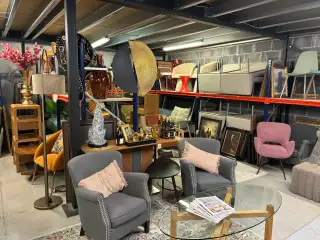
Props 360’s premises are three floors heaving with every item a modern home could need – several times over. Take a stroll around the building and in every corner you’ll find furniture, lights, crockery, cutlery, electronics, stationary, toys, art, linen, and all kinds of assorted bric-à-brac.
It’s a set dresser’s paradise, established by five founders inspired by their own backgrounds in production design. After completing a job, these environmentally conscious professionals would try to hold onto pieces that could be re-used in future. Eventually, a light-bulb moment occurred: Why not hoard these props in their own dedicated space where they could be accessed when needed?
The organisation was established in 2023 with the vision of being a hub where film and advertising productions could source and rent props. This would save producers from purchasing brand new items for their sets that, as the founders have seen throughout their career, were often binned as soon as the cameras stopped rolling.
“We saw a need for a contemporary prop house because there’s a lot of waste generated in this business,” explains Props 360’s Keavy Lalor, a prop buyer for 25 years.
It’s an ongoing problem – to this day, photos of full skips snapped outside of studios circulate Props 360’s WhatsApp group, acting as reminders of the need for a more sustainable alternative that they’re trying to provide.
“The film industry is enormously wasteful, because you create something and it’s on set for a week or two weeks or a month, and then it’s gone,” says Keavy. “Everything is just disassembled and not everything gets reused. A lot of it goes into the skip. We’re very aware of that.”
“Stuff is bought and used for a job and then it’s scattered to the four winds. Then you’re back doing another job a month or two later and you need to find the exact same stuff and you go and buy it again.
“If we can reduce that waste, and reduce the amount of work, time, effort and cost that goes into sourcing the same things again and again, it makes life easier for prop buyers. And, obviously, it’s a very sustainable way of doing things too because you’re eliminating buying one-off items again and again.”
Their team’s extensive industry contacts have helped them get the word out: They’ve already provided props for TV shows such as Cooper & Fry, The Rainmaker, The Heights, Irish Blood, Lynley, The Walsh Sisters and Grown Ups, the movie Power Ballad, and television adverts for Vodafone, Super-Valu, Sky and others. “It’s fun when you’re watching an ad on TV and you go, ‘Oh there are our cushions in the background’ or ‘I recognise that coffee table,” says Keavy.
Having begun life in Glenealy, Wicklow, Props 360 moved to its current premises in Tallaght, Dublin in January of last year. Everything you’ll find here has been donated from completed productions that otherwise would have been discarded; the only thing purchased by the organisation itself is the shelving used to store it all.
Prop 360's contemporary prop warehouse
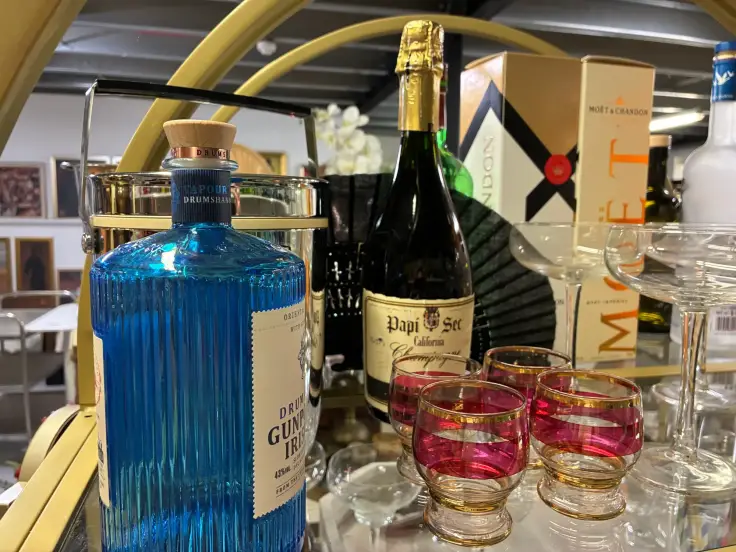
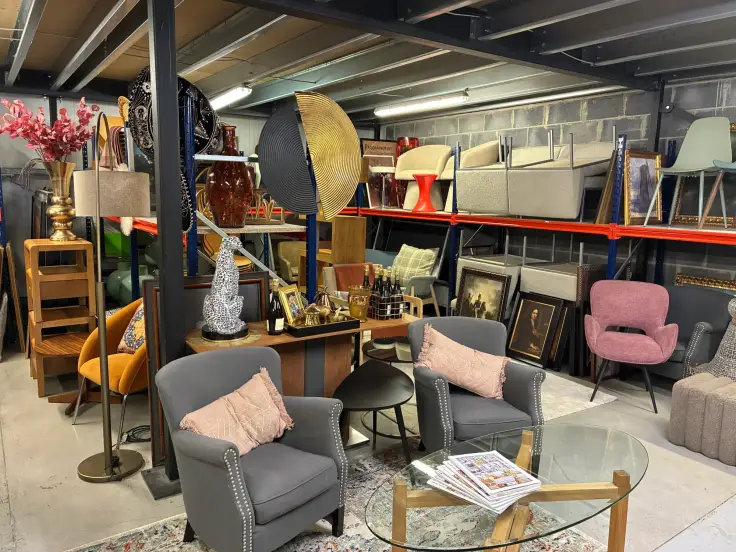
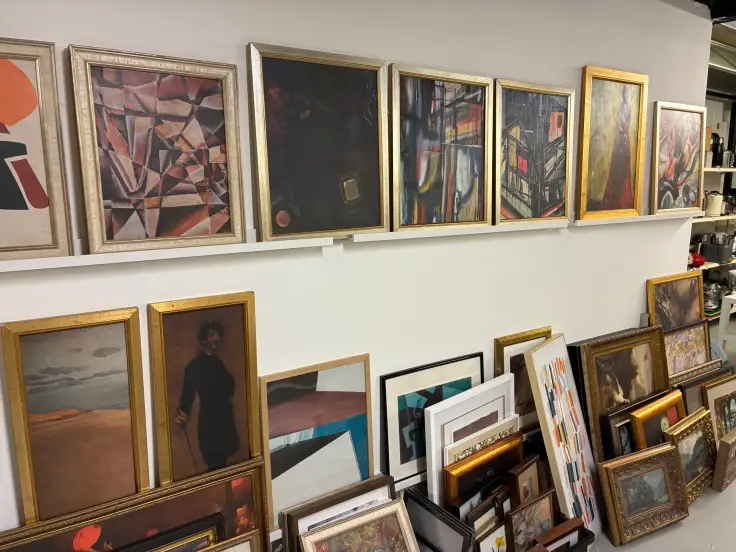
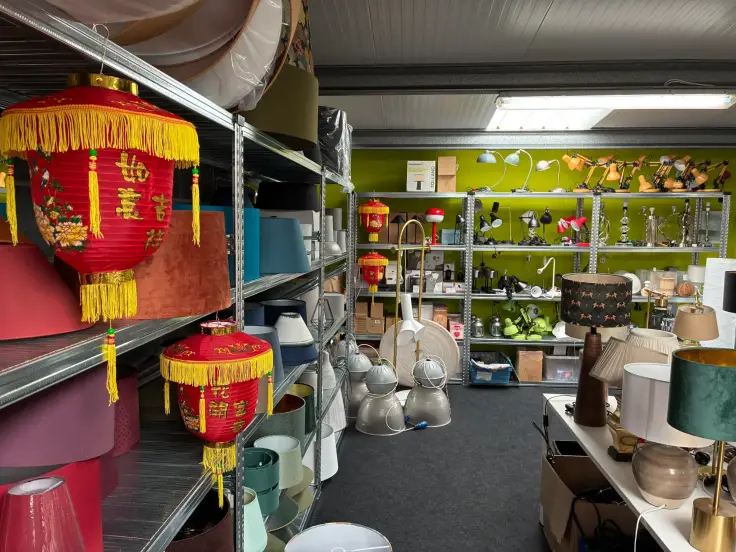
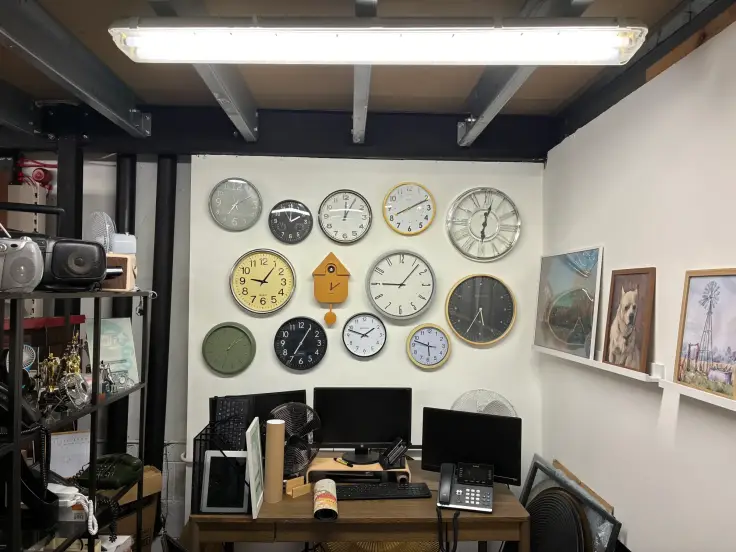
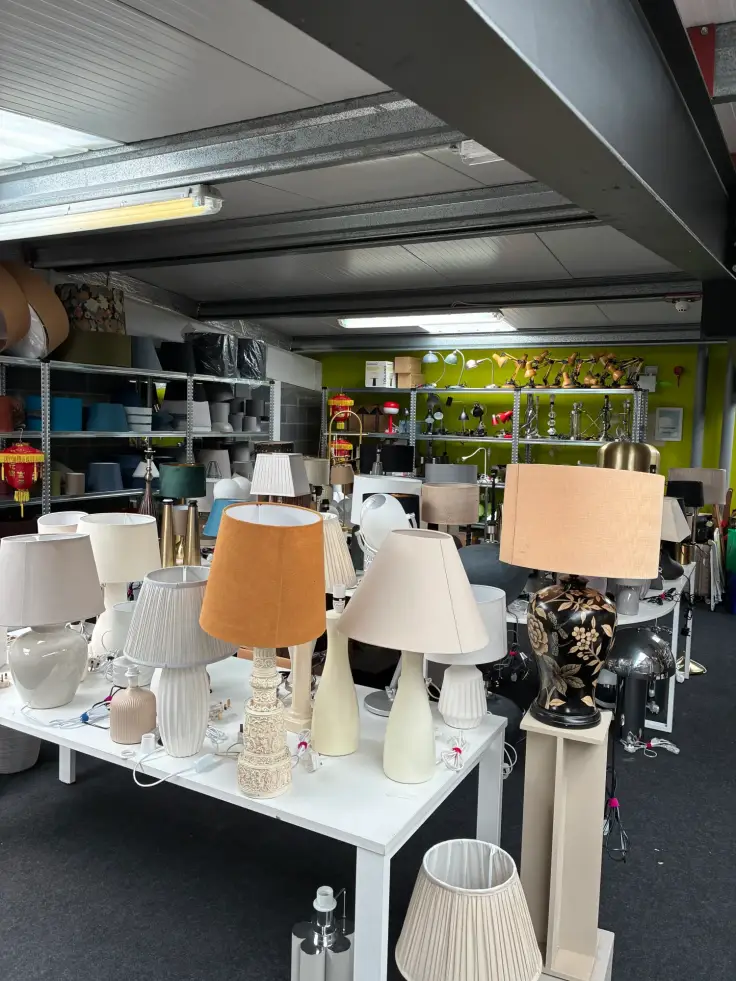
Having all the goods browsable in one place, with seemingly limitless options, is a huge time saver for set designers who otherwise may have to journey around very many stores trying to find the perfect piece. One trip to Props 360 means they can plan their sets, right down to the smallest imaginable minutiae, in one trip. While people might hear the word “prop” and think “fake”, pretty much everything on these shelves is genuine and could still be used to fulfil its intended function.
“If somebody said to you, ‘Go get me like six trophies,’ You’re like, ‘Where the hell am I going to get six trophies that don’t look exactly the same?” says Keavy. “It saves a lot of labour and it saves a lot of journeys.”
As they’re not selective about where their inventory originally came from, Props 360 offers wares produced by a wide array of companies, so they can be mixed and matched. This is useful for set designers as real, lived-in homes don’t generally have items sourced from one store or that adhere to a single style of design. And unlike brand new purchases, there’s a used feel to most the stock, meaning it generally looks more natural on a set than out-of-the-box equivalents.
Fees differ depending on how long the prop is rented for, but the cost cannot exceed 45 percent of purchasing the item new, meaning it’s also cost efficient. “No matter how long you're hiring something for, it’s going to be less than half the price to buy it,” asserts Keavy.
Though it’s a service in demand, Props 360 operates as a non-profit. The five founders invest their time as volunteers, with one additional employee working two mornings a week. Still, they want to keep growing. Lalor says that the organisation is not yet at full capacity, so it’s still accepting donated items not already on the shelves.
Though they admit to fulfilling a need that could be accurately described as niche, Props 360 is nonetheless promoting a circular economy in an industry that can do more to ensure it operates sustainably, ethically, and more green.
This case study was conducted in partnership with Sustainable Media Ireland.