
‘Dramatically reducing waste’ with Pax Wholefoods
Pax Whole Foods & Eco Goods was established on solid core principles. Firstly, no product packaging when possible. Pasta, seeds, grain, oats, olive oil, shampoo, soap, washing detergent – most of their inventory can be loaded into customer’s own jars, tubs and bottles, a simple and effective way to promote a circular economy. Indeed, part of the business’s ethos is educating the consumer on how to prepare and maintain their own storage containers.
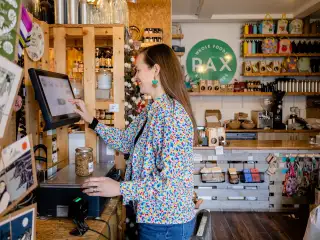
Pax Whole Foods & Eco Goods was established on solid core principles. Firstly, no product packaging when possible. Pasta, seeds, grain, oats, olive oil, shampoo, soap, washing detergent – most of their inventory can be loaded into customer’s own jars, tubs and bottles, a simple and effective way to promote a circular economy. Indeed, part of the business’s ethos is educating the consumer on how to prepare and maintain their own storage containers.
Next, it’s organic food as standard. Pax wants to decrease its customer’s exposure to chemically-treated foods while supporting Irish farmers whose produce is chemical-free. (The company’s website includes blog posts on the benefits of buying organic).
And, of course, there’s the principle of prioritising local sellers. Based in Westport, Co. Mayo, Pax channels the culture and personality of one of Ireland’s most naturally beautiful destinations. Its mission is to dramatically reduce waste by enabling customers to refill existing containers, and to support organic agriculture and local producers of all kinds of goods in Ireland.
The store was founded in December 2018 by business partners McKinley Neal and Kirstin McDonagh. Before moving to Ireland, McKinley, a native of Kentucky, had been living in the centre of Hamburg, where she shopped at a number of nearby organic supermarkets and, twice a week, at a farmers market that would set up right next to her apartment. After relocating to Ireland with her family, McKinley found the selection of organic food available to her was strangely lacking.
After attending a local seminar on how to reduce waste that attracted large crowds of sustainability-minded locals, McKinley was inspired to ditch a career in corporate HR and establish Pax.
“I created the shop that I wanted to shop in, with a huge focus on organic foods,” she explains. “I felt the way to make them more accessible was also unpackaged. You save on the cost of the packaging and marketing that a lot of brands do.” As well as operating as a grocery store, the business also supplies various cafes and restaurants in the region with organic foods and refillable cleaning products.
Irish consumers are often required to pay a premium for organic foods, and so saving on packaging is one easy way to make the price point more accessible. “That’s where you see how much you’re being price gouged for the packaging of 30 grams of smoked paprika,” says McKinley to use one example. “The price of herbs and spices, which don’t tend to be that fresh in the supermarket, is really affected by the weight of the glass jar and the branding that’s on it.”
The same can be said for other every-day products outside of the fridge or cupboard. When they first opened the business, Pax established a relationship with a local businesswoman who made organic face cream, typically selling two-hundred grams in a small jar. Pax now stocks the cream in such a way to allow customers to take it away in their own containers.
“We were thinking about all of the things that we use in our daily life and whether or not they needed to have packaging or could be refilled instead,” explains McKinley. This has grown to include such products as washing up liquid, laundry detergent, laundry powder, shampoo, conditioner and body wash – indeed, drastically reducing the number of products that require packaging has the knock-on effect of bringing down a customer’s refuse disposal costs. “So it’s not just that we eat food every day. We wash our hands, wash our hair, wash our dishes. It’s thinking about, ‘What are all the other things that we could refill?’”
Pax Wholefoods and Eco Goods stocks a wide variety of products
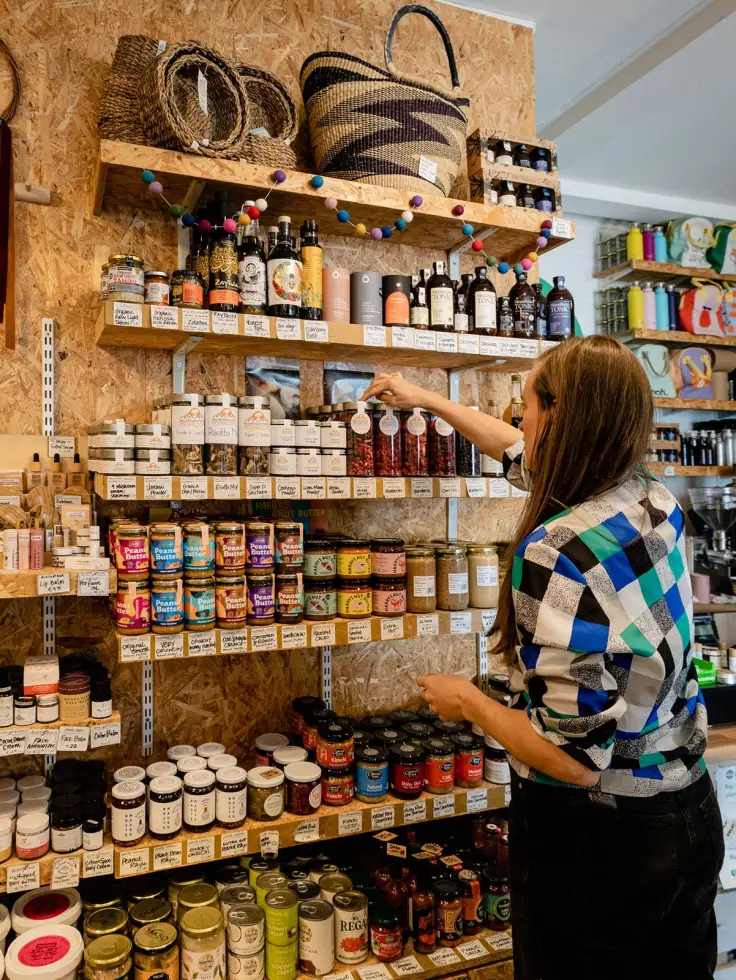
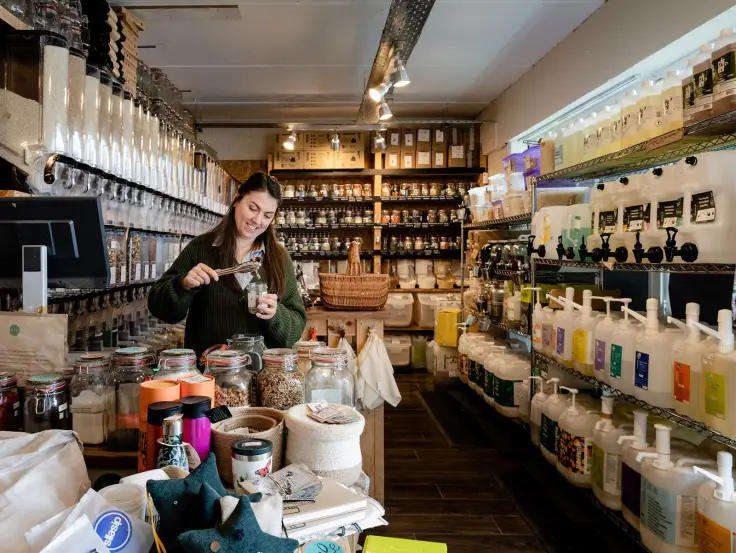
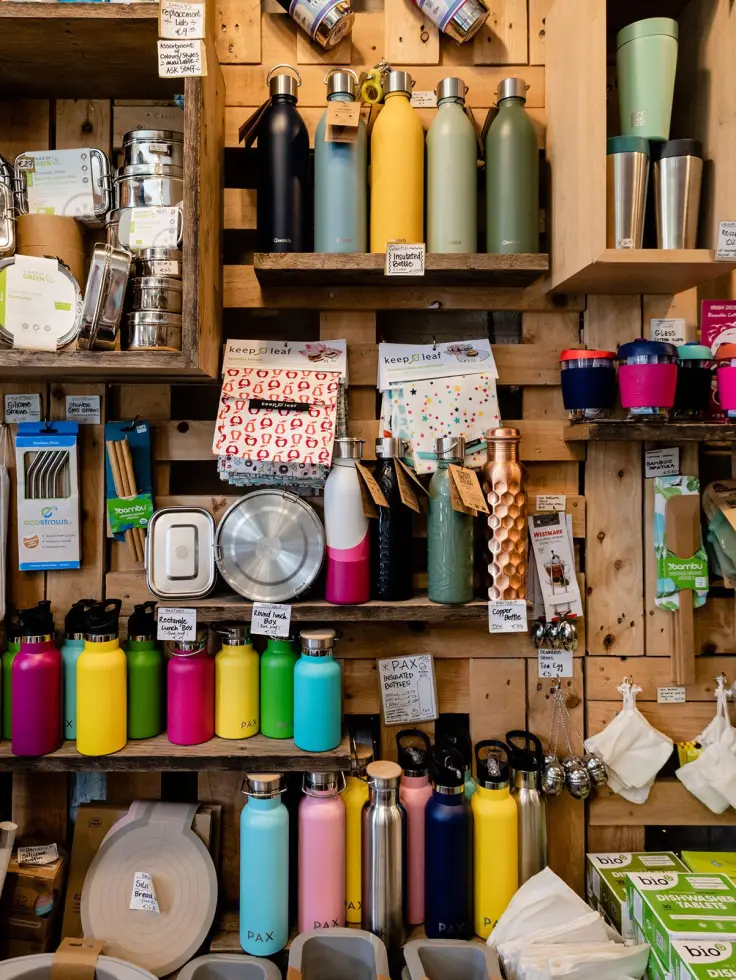
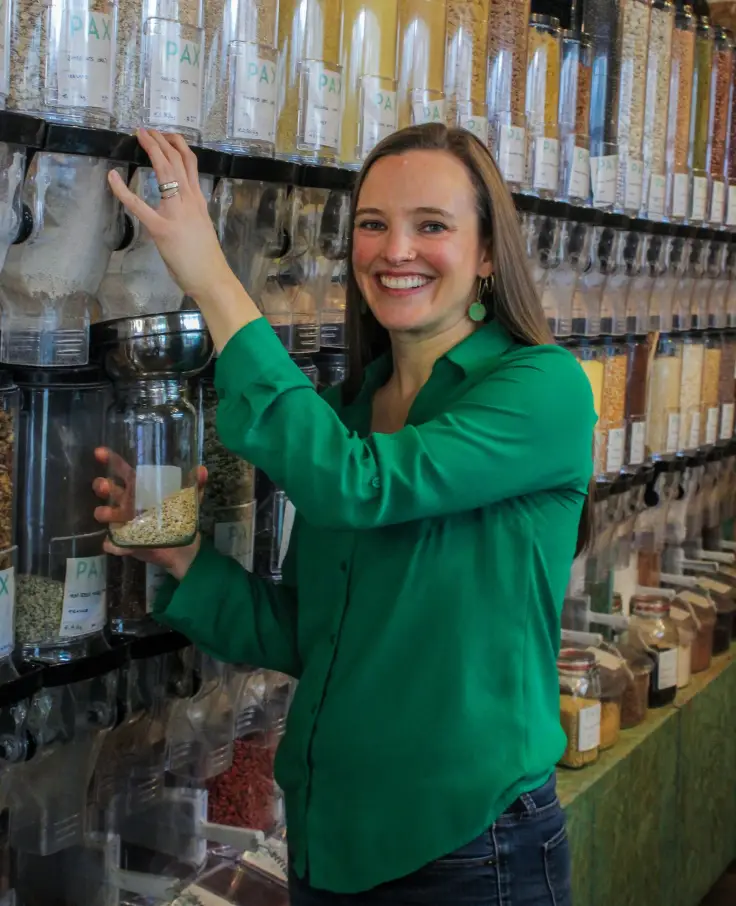
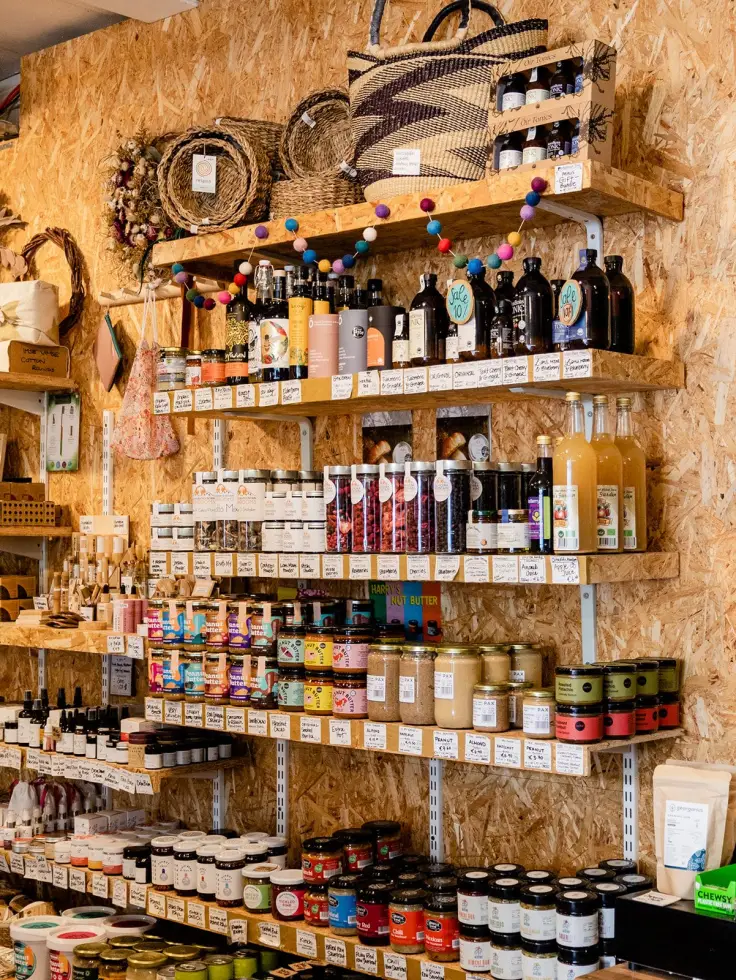
Pax’s most popular products tend to change with the seasons. Beans, lentils and barely groats are big sellers in winter, while people are inclined to switch to couscous and orzo in the summer. Sweet treats and other snacks naturally pick up in the summer too as the tourist trade takes off. Selling to travelling customers is, in fact, an increasingly important part of the business.
“We got a good start, a foothold, and we had people who bought in from the beginning,” McKinley says of their initially local customer base. “But Westport, it’s a tourist town, and for a very long time I would have said we’re not a tourist business at all. The first couple of years, the summers were not better than other times of year.”
However, this is starting to change. As the store has become more established, Pax is finding that tourists are seeking it out for a one-time visit. “That does help us,” says McKinley. “Now our summers are quite strong because we have this mix of people who are coming to support us: local people, but then also people who now have an awareness and are looking for these sustainable options when they’re traveling.”
A stumbling block towards getting more people to buy into organic food has always been the price, and so encouraging savings by reducing or limiting packaging is a potentially impactful practice. Pax also recommends buying products like pasta and grains in bulk to reduce costs. Still McKinley, stresses that food should not be “exceptionally cheap” as it has knock-on effects for sustainability and for people along the supply chain. Driving the pricing at all times is the assurance that farmers receive fair compensation.
“I know how hard farming is and clearly, here in Ireland, we are so quickly losing what little insecurity we have,” she says. “There is a huge labour cost and a huge land cost of growing food. But then, also, [Pax is passing on] savings on herbs and spices, on things like flour, on baking our own bread. And then we can commit to supporting farmers.”
This case study was conducted in partnership with Sustainable Media Ireland.